‘Veni, vidi, vici’ felt like the perfect motto as Form 1 brought history to life with their vibrant production of ‘The Romans Rewrite’. The performance, filled with singing, dancing and drama, was full of energy and commitment. The young cast were clearly having great fun on stage, and their confidence, teamwork and sense of playfulness shone through in every scene. What was even more striking, though, was the learning behind it. Through drama, music and movement, pupils explored Roman history in a way that made the past tangible, memorable and properly understood.
The play was extraordinary! It was clear that the children have been stretched, challenged, developed, supported and had so much fun in the best possible way.
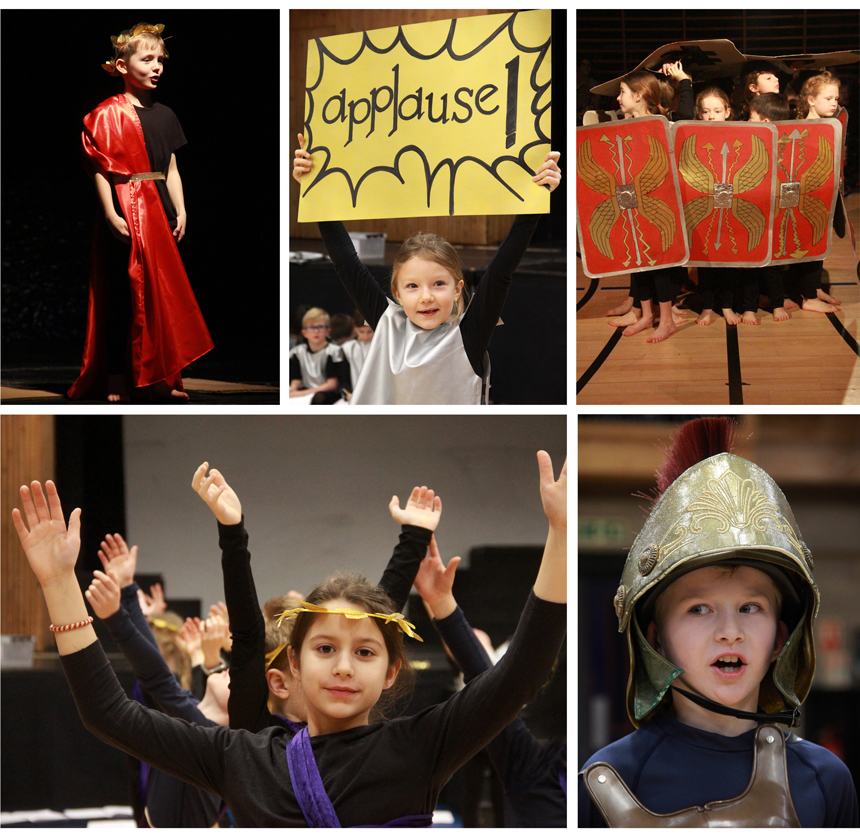
The production shone a spotlight on well known historical figures including Julius Caesar, Emperor Nero, Emperor Claudius and Boudicca. This light hearted musical presented reimagined events and viewpoints grounded in historical evidence, with a touch of poetic licence. The opening number, ‘The Puzzling Past’, invited budding historians to reflect on the subjective nature of history and how stories are shaped by those who tell them.
Roman gods and goddesses were introduced through a lively catwalk style sequence that showcased their powers and personalities. These divine figures became the narrators of the show, each linked to a famous Roman character whose story they helped to unfold.
I was so impressed by so many aspects of it. The drama skills were evident for all to see, and the children’s engagement and the sheer fun they were clearly having was infectious to watch.
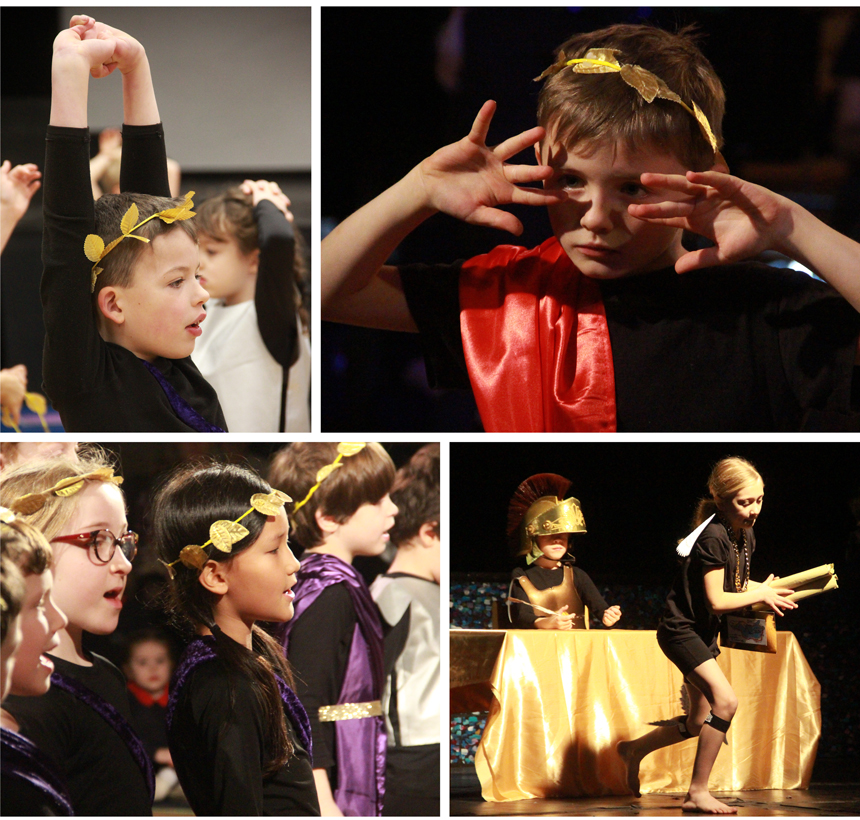
Julius Caesar was the first to take centre stage, introduced by Jupiter. Caesar proudly shared his achievements in ‘It’s My Empire’, before Crassus and Pompey the Great offered their own perspective. Saturn transported the audience back to 58BC to witness the Gallic Wars, including the preparations for the Battle of Alesia in ‘The Training Dance’. Caesar’s self written Gallic Commentaries were delivered across the Empire by Mercury, while Vercingetorix provided his own spirited response in ‘The Vercingetorix Mix’.
The story then moved forward to Emperor Claudius and his successful invasion of Celtic Britain in 43AD. Several versions of Claudius appeared on stage, each reflecting a different historical interpretation. Minerva encouraged the audience to consider which portrayal might be closest to the truth.
The songs, the music, the drama, and the spectacular dancing were joyful from start to finish, matched by a wholehearted commitment to telling the story. It was a genuinely authentic learning experience.
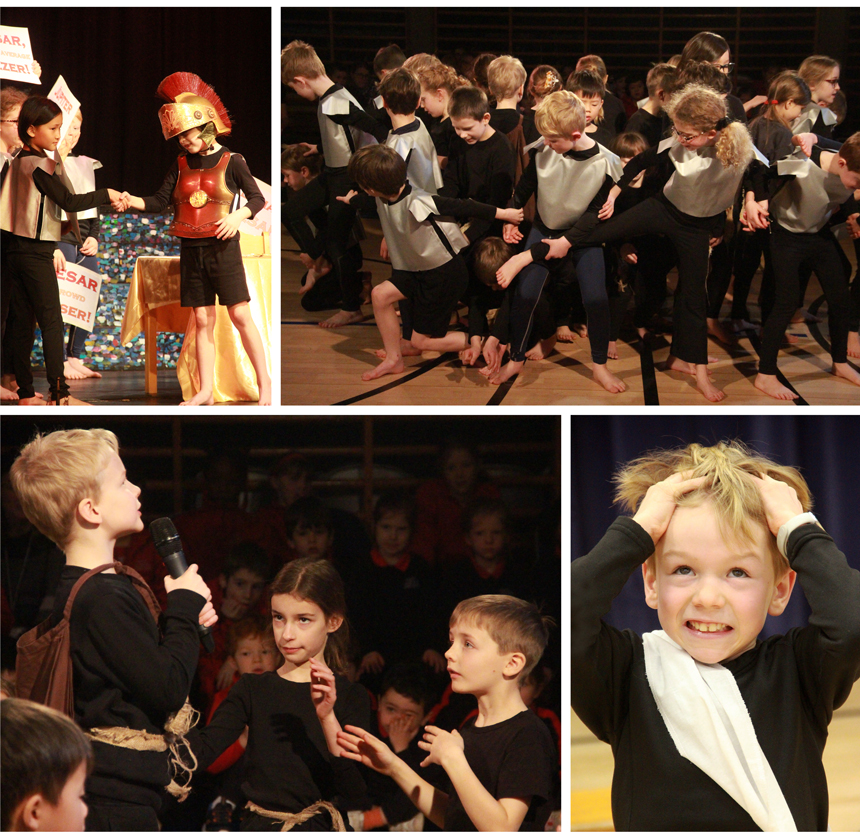
Emperor Nero followed, determined to rewrite his own legacy. In Justicia's courtroom, Nero attempted to defend his reputation while Boudicca presented her own powerful evidence against him. Mercury read from historical sources as the jury acted out each scenario, leading to a lively debate between Nero and Boudicca in ‘The Portrait Dance’.
The show concluded with Minerva’s reprise of ‘The Puzzling Past’, reinforcing the central theme of historiography and reminding the audience that history is never a single story but a tapestry of perspectives. The production also highlighted the rich teaching and learning that sits behind the performance. Pupils were not only acting and singing but actively engaging with historical sources, questioning interpretations, comparing viewpoints and developing a deeper understanding of how evidence shapes the stories we inherit.
Through this creative approach, children strengthened their critical thinking, collaboration and communication skills, showing how powerful learning becomes when knowledge, curiosity and imagination come together on stage.